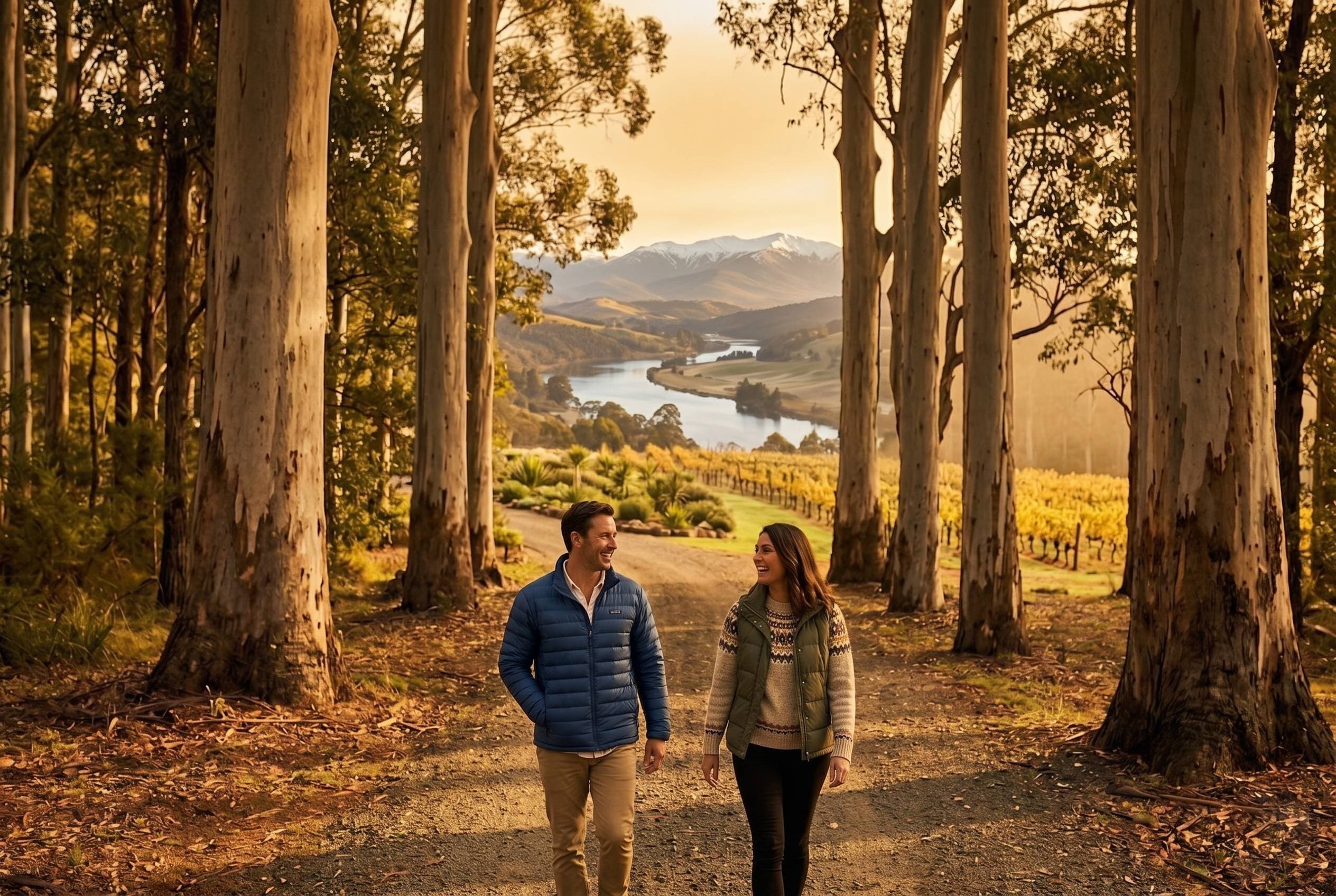
TasmaniaWine Tours
Australia's island wine state sits in the Roaring Forties, where cool maritime air and ancient dolerite soils produce sparkling wines, Pinot Noir, and Chardonnay that have earned their place on every serious wine list in the country.
Choosing your Tasmania wine tour
Tasmania never built the big-bus wine tour, and the island is better for it: small-group touring with capped numbers is the standard format here, with day tours from $99 to $300 per person. Private tours go a step further, from flexible personalised days to luxury Mercedes touring through the Huon, Derwent, and Coal River valleys. Most visitors book a full day of 4 to 5 cellar doors with lunch, while cruise passengers and tight schedules suit the half-day formats that start tasting within half an hour of either city.
Hobart or Launceston?
Tasmania's wine country splits between two gateways. From Hobart, the Coal River Valley and historic Richmond start 20 minutes from the wharf, with the Huon and Derwent close behind; our Hobart wine tours guide covers the southern routes. From Launceston, the Tamar Valley is the heart of the island's sparkling country; the Launceston guide maps it. East Coast itineraries reach Freycinet and the Devils Corner lookout for the island's most photographed tasting. And everywhere you go, expect the sparkling and Pinot Noir this cool-climate island does better than anywhere in Australia.
Longer stays and bigger occasions
Tasmania is a touring island: operators like Discover Tasmania Tours and Fun Tassie Tours run multi-day circuits from overnight Tamar stays to 5 to 13 day loops of the whole island. Celebrating? Our hens party guide and 2026 events calendar cover the occasions, and the cost guide breaks down what every format charges. Browse the operators below, filter by style or duration, and enquire directly with the ones that fit.
Experiences
0 itineraries matching your filters
No experiences match your filters.
Try adjusting your filters or clearing them to see more results.
Frequently Asked Questions
How much does a Tasmania wine tour cost?
Small-group day tours run from $99 to $300 per person: Tamar Valley departures from Launceston start at $99, Hobart-based Coal River days sit around $145 to $250, and premium gourmet formats reach $300. Private day touring runs up to $369, and multi-day island circuits are quoted by itinerary.
Should I base myself in Hobart or Launceston for wine touring?
Hobart accesses the Coal River Valley, Richmond, and the Huon and Derwent valleys, all within 20 to 40 minutes. Launceston is the gateway to the Tamar Valley, the centre of Tasmania's sparkling production. Both cities have dedicated operators; multi-day tours cover both.
What wine is Tasmania famous for?
Sparkling wine above all. The island's cool climate produces Australia's finest traditional-method sparkling, alongside Pinot Noir, Chardonnay, and Riesling. Tastings across the Tamar and Coal River lean heavily on sparkling and Pinot.
Are there small group wine tasting tours in Tasmania?
They are the island's speciality: 14 of Tasmania's operators run capped small-group formats, typically 4 to 12 guests, and big-bus touring barely exists here. Boutique group sizes mean cellar doors host the whole group at one tasting bench.
Can you do a multi-day wine tour of Tasmania?
Yes. Operators run everything from overnight Tamar Valley stays to full island circuits of 5 to 13 days that combine wine country with the east coast, wildlife, and whisky. Multi-day formats are quoted by itinerary and book out well ahead in summer.
When is the best time to visit Tasmania's wine regions?
Summer and early autumn bring the best touring weather and vintage activity, but cellar doors pour year-round and winter tastings by the fire have their own case. Cruise season concentrates half-day demand in Hobart, so book short formats ahead from December to March.
The Dossier
Tasmania's wine regions are spread across the island: the Tamar Valley is 45 minutes north of Launceston, the Coal River and Derwent valleys are 20 to 40 minutes from Hobart, and the East Coast runs 200km between Bicheno and Orford. Fly into Hobart or Launceston and build a circuit; the distances are manageable and the scenery between cellar doors is half the experience. Allow at least three days to do the island's wine culture justice.
Harvest is late: April through May, sometimes into June, the last major harvest in Australia and a window most interstate visitors don't know about. Spring and early summer (October to December) show the island at its most lush, with mountains still snow-capped behind the vines. January and February are peak visitor months but the days are very long, the weather reliable, and MONA's cultural calendar in Hobart running at full pace.
Sparkling wine is the island's most celebrated export: cool climate, high natural acidity, and an obsessive approach to méthode traditionnelle have produced examples that hold their own in international blind tastings. Pinot Noir is the prestige still wine: fragrant, structured, and radically different in expression between the island's north and south. The food culture around Hobart has become one of Australia's most serious; MONA anchors an arts-and-gastronomy scene that makes Tasmania feel like no other wine destination in the country.
Curated Reads

Tell us what you're after
Send one enquiry and we'll match you with the right Tasmania operator for your group. No cost, no obligation.
Not sure which operator?
We'll match you with the right tour