Barossa ValleyWine Tours
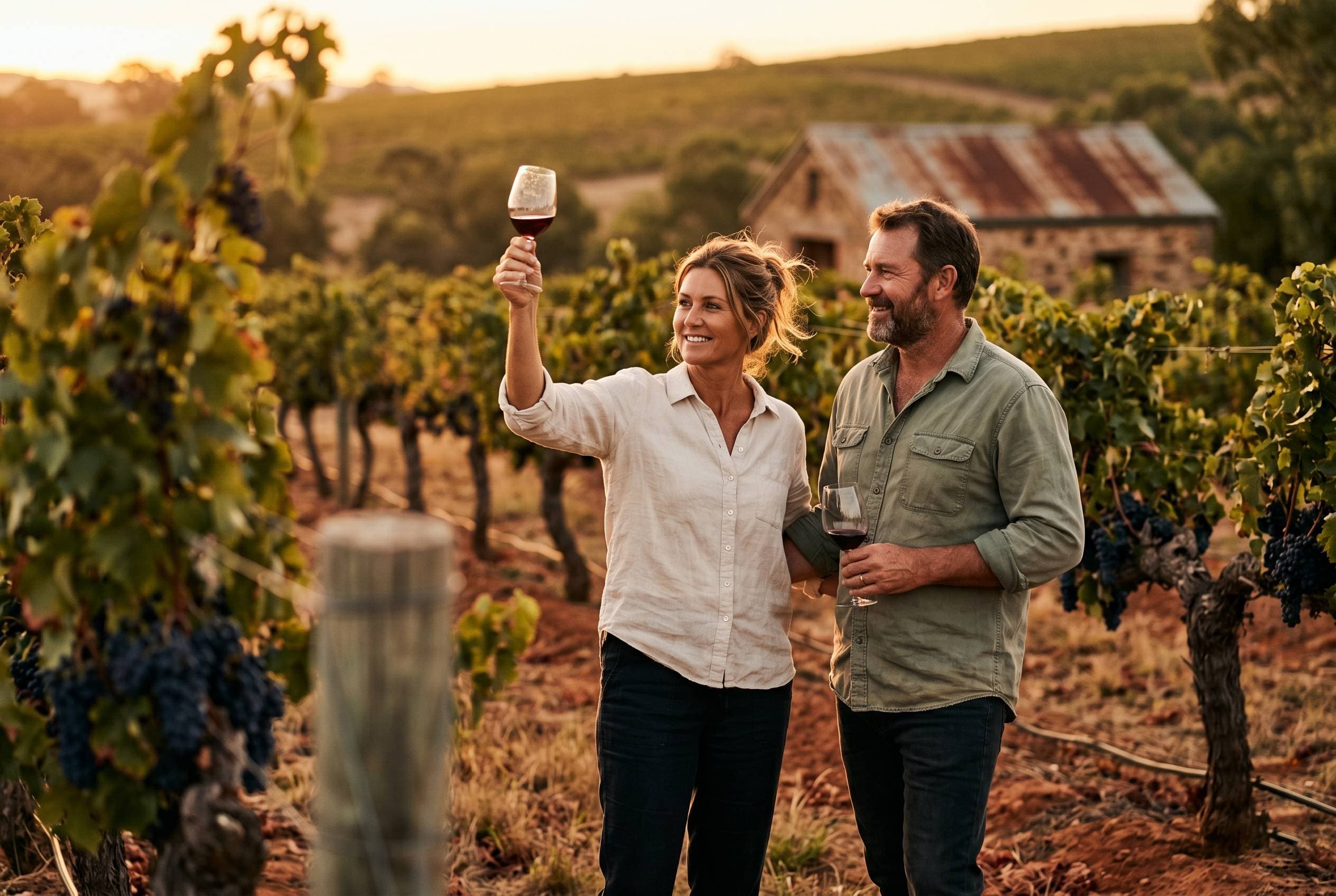
One of the world's great Shiraz regions: a wide, sun-drenched valley 70km north of Adelaide where third-generation families still hand-prune 160-year-old vines and lunch means three hours minimum.
Choosing your Barossa wine tour
Australia's most famous wine valley runs the widest tour spectrum in the country: 31 operators, from a $60 hop-on hop-off bus to a $647 helicopter day that lands for lunch at St Hugo. Private touring is the region's default, with 30 operators and vehicles that include vintage London cabs and a classic Mustang convertible. Small-group days cap at 6 to 8 guests, led by TripAdvisor's eight-year regional number one, while luxury formats unlock appointment-only estates. Most visitors book a full day: 4 to 5 cellar doors from a field of more than 80.
Getting here, staying here
The Barossa is about an hour from Adelaide, and our Adelaide to Barossa transport guide covers every way in. Staying longer pays off here more than any Australian wine region: the towns guide explains Tanunda, Angaston, and Nuriootpa, the where-to-stay guide matches areas to trip styles, and where to eat keeps the non-tasting hours busy. New to the region's wines? Start with what the Barossa is famous for (short answer: Shiraz, and much more) and our beginners' winery guide.
Occasions and timing
Corporate days trade on the valley's name recognition an hour from Adelaide, and a hens weekend here runs on private vehicles and long lunches. Time your visit with the 2026 event calendar, and if budget is the question, the cost guide breaks down every tier. Browse the operators below, filter by style or occasion, and enquire directly.
Experiences
1 itinerary matching your filters
Adelaide Party Buses
Adelaide Party Buses
Group winery tours by party bus across Adelaide's wine regions.
Duration
Full day
Frequently Asked Questions
How much does a Barossa Valley wine tour cost?
The widest range in Australian wine: $60 for the hop-on hop-off bus, $99 to $149 for shared day tours, $140 to $270 for private and character-vehicle formats, $220 to $475 at the luxury end, and $647 for the helicopter day with lunch at St Hugo.
How do I get to the Barossa Valley from Adelaide?
The drive takes about an hour, and most tour operators collect from Adelaide CBD hotels and suburbs door-to-door. Visitors staying in the valley can join tours from Tanunda, Angaston, and Nuriootpa accommodation instead.
What wine is the Barossa Valley famous for?
Shiraz, above everything: the Barossa's old-vine Shiraz defines Australian red wine worldwide. Grenache, Mataro, Cabernet, and Eden Valley Riesling from the neighbouring high country round out the picture.
How many wineries can you visit in one day?
Tours cover 4 to 5 cellar doors of the region's more than 80, with a lunch stop. The hop-on hop-off format works differently, letting you linger at each stop and catch the next bus through the loop.
Where should I stay for a Barossa wine trip?
Tanunda puts the most cellar doors and restaurants in walking distance, Angaston trades size for charm, and Nuriootpa is the practical base. Staying a night or two beats a day trip; several operators run tours from valley accommodation.
When is the best time to visit the Barossa?
Vintage, roughly February to April, is the most atmospheric period, and autumn colour makes April and May the photographer's pick. Winter pairs Shiraz with open fires, and festival weekends through the year book out earliest, so check the events calendar before locking dates.
The Dossier
A clean 70km drive north of Adelaide along the Sturt Highway: about an hour with no stops, though the roadside stalls at Gawler will tempt you. The valley floor unfolds in blocks of rust-red earth, old stone settlements, and Lutheran church spires. Arrange a driver and stay the night; one day is never enough.
March and April are the peak of vintage. The air smells of crushed grape, cellar doors run extended hours, and the sense of urgency is infectious. Spring (September to October) is quieter, cooler, and spectacular with mustard flowers growing between vine rows. Avoid December to January if you can; the heat is punishing and some smaller producers close.
Old vine Shiraz is the signature, and some of the oldest commercially producing vines on earth live here, giving wines of extraordinary depth and presence. Grenache and Semillon have long histories too, and the food scene has grown into the vines: wood-fired lamb, aged Schulz charcuterie, and long tables on estate lawns. Cellar doors range from 150-year-old stone barns to architectural statements; both types tend to pour generously.
Curated Reads

Tell us what you're after
Send one enquiry and we'll match you with the right Barossa Valley operator for your group. No cost, no obligation.
Not sure which operator?
We'll match you with the right tour