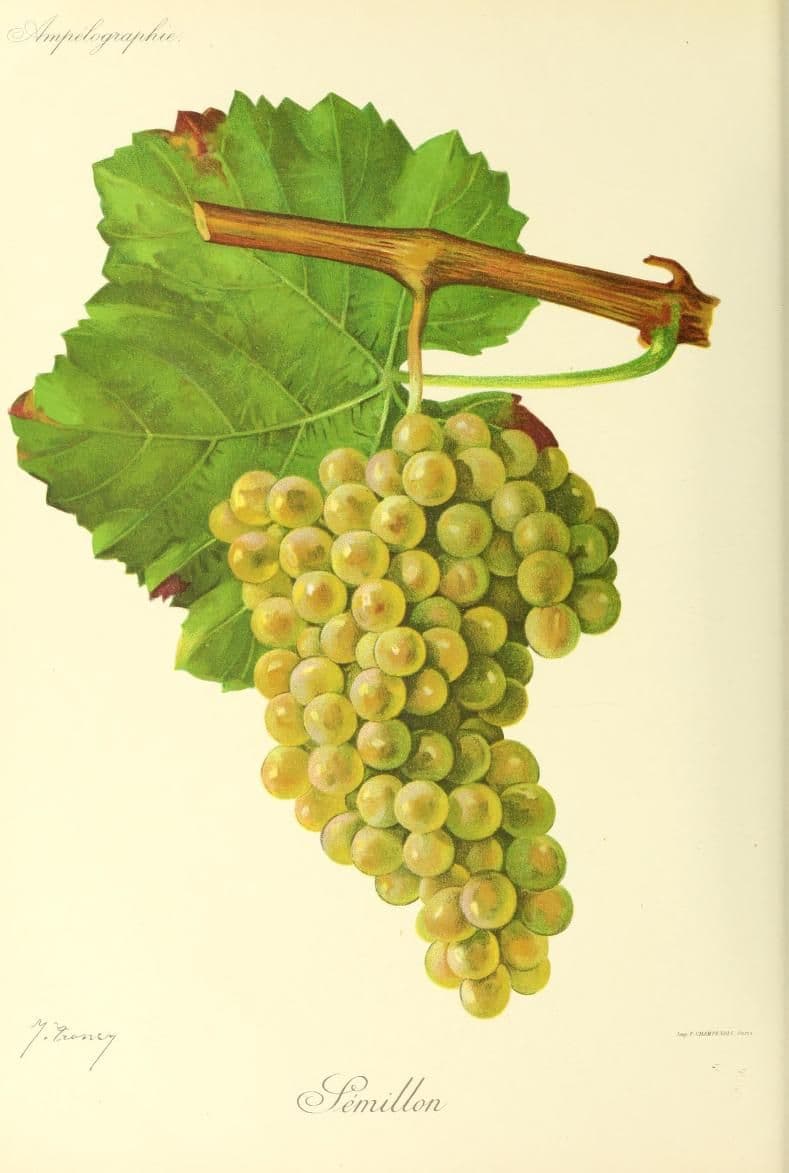
Semillon
also answers to Sémillon
Picked thin and shy at eleven percent, Hunter Semillon spends twenty years becoming the most distinctive white wine in the world.
The slowest magic trick in wine
Taste a Hunter Semillon at one year old and you will wonder what the fuss is about. It is pale as rainwater, eleven per cent alcohol, tasting faintly of lemon and not much else. Polite. Forgettable. Then somebody opens the same wine at twelve years old and it has become toast and honey and lime marmalade — rich as if it had been barrel-fermented, except no barrel was ever involved. Nothing was involved. It sat in a bottle and rewrote itself.
No other white wine in the world does this quite so completely, from a start quite so plain. The Hunter Valley has been performing the trick since before anyone understood it, and mostly the world still hasn’t noticed. Which keeps the prices merciful, and the cellar doors quiet enough to hear the whole story.
Bordeaux, minus the accent
Semillon is Bordeaux’s grape — the backbone of Sauternes, where noble rot concentrates it into golden dessert wine, and the quiet partner in the white blends of Graves. It arrived in Australia with the early cutting collections of the 1830s and settled into the Hunter so thoroughly that for a century locals refused to call it by name: it was sold as “Hunter River Riesling”, a label that was wrong in every particular and beloved anyway. The accent went missing somewhere on the voyage out — Australian wine law and Australian habit both spell it Semillon, no é.
Year 1
Lemon pith, talc, cut grass. Austere, almost silent. 10.5–11.5% alcohol.
Year 5
Lemon curd arriving. The acid line still taut; the first hint of warmth.
Year 12
Buttered toast, honeysuckle, lime marmalade. No oak was involved. Nobody believes this.
Year 20
Honey, lanolin, brioche, flint. Still fresh underneath. The trick completed.
Same wine. No oak. Only years. — typical Hunter Semillon trajectory
Why it only works here
The Hunter should not make delicate white wine. It is subtropical — hot, humid, harvest-season rain rolling in off the Pacific with unhelpful timing. The style exists because of the problem, not despite it: growers learned to pick early, before the February rains, when the grapes are still low in sugar and electric with acid. The result is a wine of ten-and-a-half to eleven-and-a-half per cent alcohol, fermented in steel, bottled young and plain.
Picked that early, the grape keeps a core of acidity that acts like a preservative — and over years in bottle, slow chemistry builds the toast and honey that taste for all the world like oak and age-defying richness. The humidity that makes Hunter reds a gamble is precisely what makes the Semillon style necessary. It is the best example in Australia of a region turning its weather problem into its signature.
The other Semillons
In Margaret River the grape plays a different role: blended with Sauvignon Blanc into the region’s crisp, grassy-tropical white — the wine on every second Australian table in summer. The Barossa keeps old plantings that make a broader, richer dry style. And in the Riverina, autumn mists off the irrigation canals bring botrytis — the same noble rot as Sauternes — for luscious dessert Semillon that put the region on the fine-wine map.
Four regions, four different answers to the same grape. The Hunter’s remains the strangest and the most Australian: patience, bottled.
In the glass
Year one — pale straw, green flash
Year five — lemon settling in
Year twelve — toast begins
Year twenty — burnished gold
Where to taste Semillon
NSW · the heartland
Hunter Valley
Two hours north of Sydney and Australia's oldest wine region: the Hunter Valley is where Semillon was turned into something utterly unique, and where weekends from the city have been a ritual since the 1960s.
Wine tours in Hunter ValleyWA
Margaret River
At the southwestern tip of Western Australia, Margaret River is a surf coast turned wine country: where Cabernet Sauvignon and Chardonnay grow to world standard between the Indian Ocean and the Southern Ocean.
Wine tours in Margaret RiverSA
Barossa Valley
One of the world's great Shiraz regions: a wide, sun-drenched valley 70km north of Adelaide where third-generation families still hand-prune 160-year-old vines and lunch means three hours minimum.
Wine tours in Barossa ValleyNSW
Riverina
The vast irrigated flatlands of the Murrumbidgee River in southwestern NSW: the Riverina produces a staggering proportion of Australia's wine, and within that volume, some of the country's most extraordinary sweet wines from botrytis-affected Semillon that has no peer in the Southern Hemisphere.
Wine tours in RiverinaReading about wine is the rehearsal. The tasting room is the show.
Browse every wine tour region