Malbec
also answers to Côt
Everyone assumes Malbec is South American. Mudgee has been growing it since the 1850s, old vines that predate Argentina’s entire modern Malbec industry by decades.
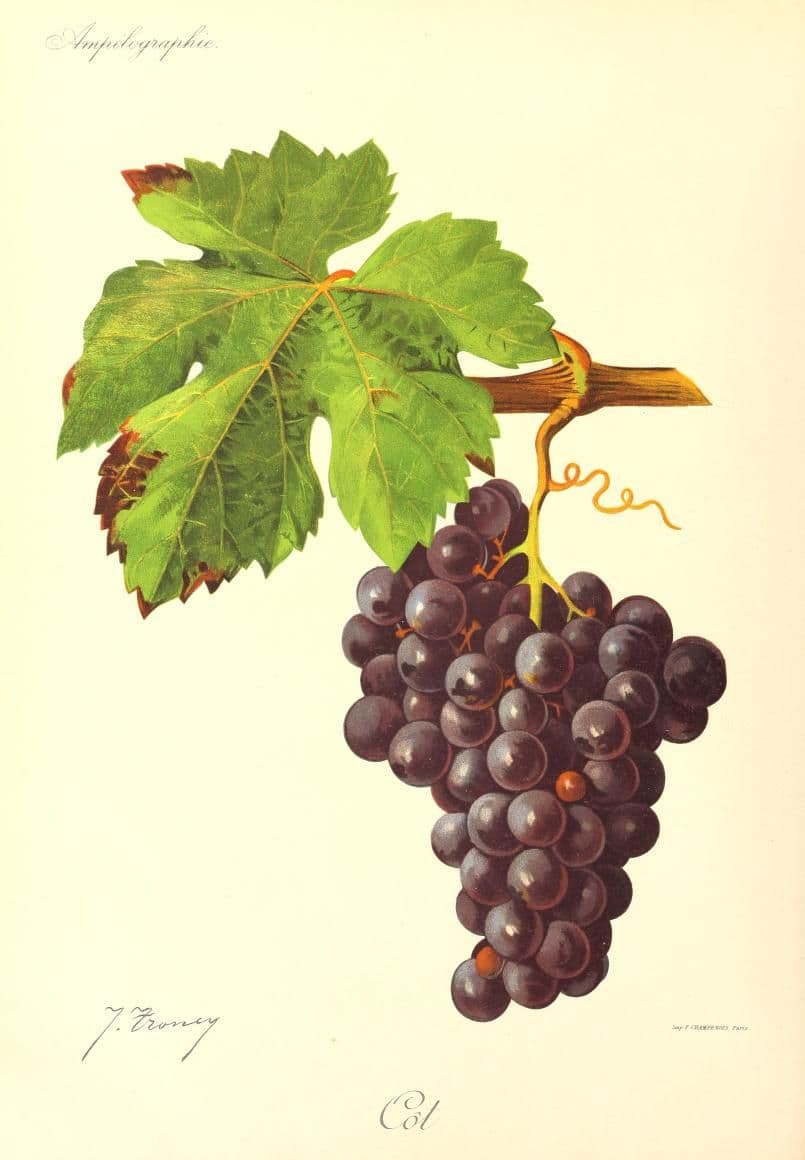
Older than the country famous for it
Mention Malbec to almost anyone and they think of Mendoza, Argentina, and fairly so, since Argentina now produces more of it than the rest of the world combined. What almost nobody knows is that Mudgeehas been growing Malbec since 1858, more than a century before Argentina’s modern Malbec industry existed in anything like its current form.
France's black wine, twice exiled
Malbec is originally a grape of Cahors, in south-west France, where dark, tannic “black wine” built from it has been made for centuries. Phylloxera devastated French Malbec in the 1870s just as thoroughly as it devastated everything else, and the grape never fully recovered its old French prominence: overshadowed at home by Bordeaux’s Cabernet and Merlot, and largely forgotten internationally until Argentina, working with cuttings imported decades earlier, turned it into the country’s signature export from the 1990s onward.
Mudgee’s Malbec arrived on an entirely separate branch of that same story: part of the same nineteenth-century colonial cutting collections that brought Shiraz and Semillon to Australia, planted, and then simply left alone for a century and a half while the rest of the wine world forgot the region had it at all.
Same year axis, both lines: the gap between the dotted marker and Argentina's start is the point
swipe to explore →
What a century and a half of vine age buys
Old vines produce less fruit and more concentration, and Mudgee’s oldest Malbec blocks (genuinely among the oldest continuously producing Malbec vines anywhere on Earth) carry a depth that young plantings simply can’t replicate. The wines are inky, structured, full of dark plum and violet, with a savoury, earthy undertone that reads as distinctly Australian rather than an attempt to imitate Argentina’s riper, more fruit-forward style.
Mudgee’s elevation (high enough for real diurnal temperature swings) helps too, keeping acid intact through a long ripening season in a way that flatter, hotter sites can’t match.
A quiet Australian original
Small plantings persist in Margaret River and McLaren Vale, mostly used in blends rather than bottled alone, but Mudgee remains the place to taste Malbec as its own statement: a grape with a genuine claim to being one of Australia’s oldest continuously planted varieties, sitting quietly in a region most wine drinkers still associate with Chardonnay and Cabernet.
In the glass
Young: inky, violet-black
Mudgee: plum, dark chocolate
Five years: fig, baking spice
Old vine: leather, dried plum
Where to taste Malbec
NSW · the heartland
Mudgee
Three hours northwest of Sydney in the folds of the Great Dividing Range, Mudgee is the unpretentious counterpart to the Hunter: older than most visitors realise, warmer than Orange, and increasingly confident about what it does best.
Wine tours in MudgeeWA
Margaret River
At the southwestern tip of Western Australia, Margaret River is a surf coast turned wine country: where Cabernet Sauvignon and Chardonnay grow to world standard between the Indian Ocean and the Southern Ocean.
Wine tours in Margaret RiverSA
McLaren Vale
Thirty-five minutes south of Adelaide, McLaren Vale is where the Fleurieu Peninsula meets the sea: maritime air, ancient almond trees, and Shiraz vines that have been working this red clay since the 1850s.
Wine tours in McLaren ValeReading about wine is the rehearsal. The tasting room is the show.
Browse every wine tour region