Sauvignon Blanc
New Zealand owns the loud version. Australia answered twice — Adelaide Hills purity, and Margaret River’s barrel-worked blends.
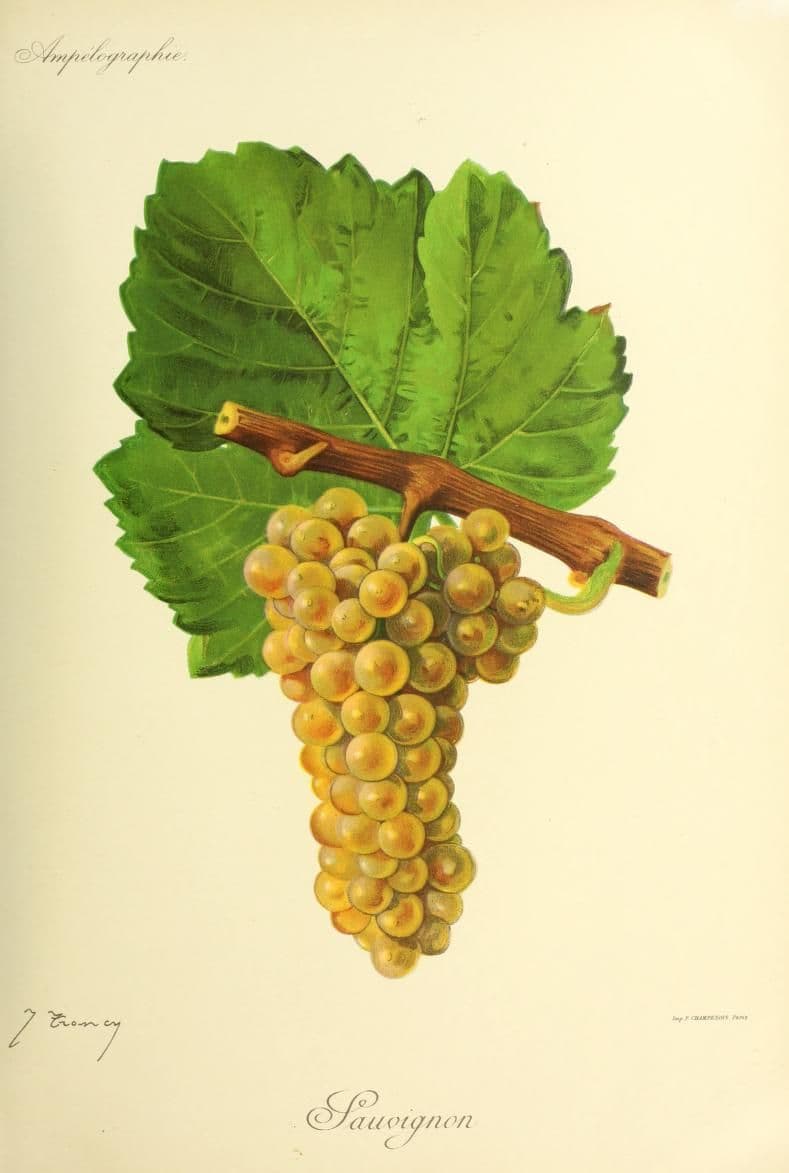
Living next to the megaphone
No white grape on Earth is more dominated by one region’s version of it. Marlborough Sauvignon Blanc — that unmistakable blast of passionfruit and cut grass from across the Tasman — conquered the world’s wine shelves inside two decades and, in doing so, quietly wrote the rules for what the grape is allowed to taste like. Australian Sauvignon has spent thirty years working in that shadow, and the interesting part is what it decided to do there: not imitate, but answer. Twice, in two different accents.
A Loire grape with famous children
Sauvignon Blanc is old Loire stock — the grape of Sancerre and Pouilly-Fumé, where it tastes of gunflint and gooseberry rather than tropical fruit. Its name likely comes from sauvage: the wild one. History remembers it best for an accident: in seventeenth-century Bordeaux it crossed with Cabernet Franc, and the child was Cabernet Sauvignon. The parent, meanwhile, kept its own counsel — early ripening, aggressively aromatic, and so responsive to climate that the same vine reads as grass in a cold year and guava in a warm one. Few grapes broadcast their postcode louder.
Styles generalised — every maker sits somewhere different on the band
swipe to explore →
Answer one: precision
The Adelaide Hills gave Australia its first serious response. High, cool and morning-misted, the Hills ripen Sauvignon to the middle of its register — past the shrieking herbaceous end, short of tropical excess — and the best versions add what the loud style rarely has: texture and restraint. It became the region’s calling-card white, and the one Australian Sauvignon that wine lists never apologise for. Further east, Orange runs the same argument at even higher altitude on old volcanic soils — fine-boned, citrus-led, quietly excellent.
Answer two: the blend
Margaret River answered differently — by refusing to bottle the grape alone. Following white Bordeaux, it married Sauvignon to Semillon: the SSB (or SBS, depending on which grape leads) became the region’s house white and one of Australia’s most reliably drinkable wines — grassy lift from one parent, lemon flesh and longevity from the other. At the serious end, barrel-fermented, lees-worked “fumé” versions play in Pessac-Léognan territory: nectarine, flint and cream, built for the table rather than the beach.
Precision in the Hills, architecture in the West. Neither sounds anything like the megaphone — which is exactly the recommendation.
In the glass
Hills — water-white, green flash
Orange — pale straw, altitude cool
SSB — straw, barrel warmth
Fumé style — gold, flinty
Where to taste Sauvignon Blanc
SA · the heartland
Adelaide Hills
Cool air, eucalyptus forests, and elevation: the Adelaide Hills is where South Australia's winemakers come when they want to grow something the valley floor simply can't give them.
Wine tours in Adelaide HillsWA
Margaret River
At the southwestern tip of Western Australia, Margaret River is a surf coast turned wine country: where Cabernet Sauvignon and Chardonnay grow to world standard between the Indian Ocean and the Southern Ocean.
Wine tours in Margaret RiverNSW
Orange
Perched 900 metres above sea level on the slopes of an extinct volcano, Orange is Australia's highest and coolest major wine region: a place where altitude rewrites every expectation you had about New South Wales wine.
Wine tours in OrangeReading about wine is the rehearsal. The tasting room is the show.
Browse every wine tour region