Viognier
A splash of Viognier co-fermented with Shiraz lifts the perfume and softens the tannin, a Northern Rhône trick the Yarra Valley borrowed and made its own.
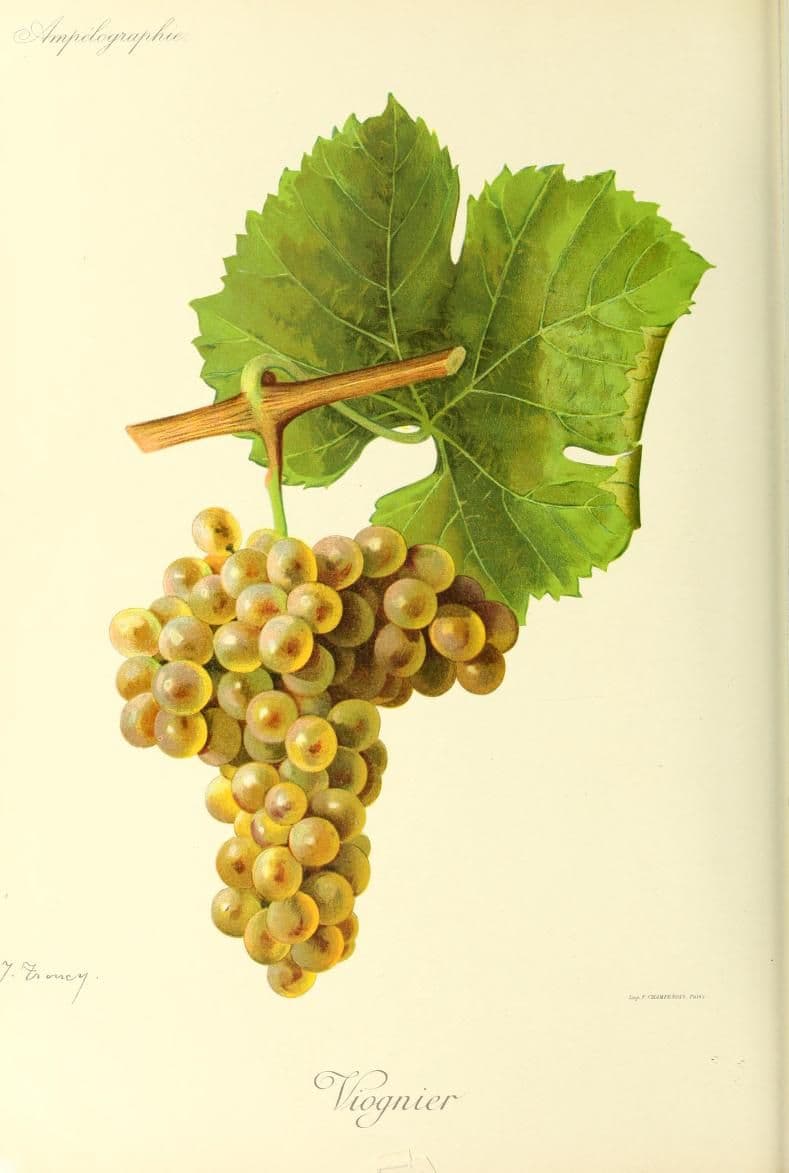
Famous for a job that isn't its own wine
Ask most Australian wine drinkers what Viognier does and the honest answer for many of them is: something to Shiraz. A small percentage (often as little as two to five per cent) co-fermented with Shiraz lifts the wine’s perfume, softens its tannin, and adds a stone-fruit lift that Shiraz alone doesn’t produce. It is a genuinely strange fate for a serious white grape: more famous, for many drinkers, as an ingredient than as a wine in its own right.
A grape that nearly didn't survive to be famous for anything
Viognier’s home is the Northern Rhône, particularly the steep granite slopes of Condrieu and Côte-Rôtie, where the co-ferment tradition originates: a small addition of white grapes to a red ferment, an old winemaking habit that outlived the reasons it started. By the 1960s the grape had nearly vanished even there: down to a handful of hectares worldwide, difficult to grow, low-yielding, and unfashionable. Only a concerted replanting effort through the 1980s and 90s brought it back from the edge of genuine extinction.
Australian growers, particularly in the Yarra Valley, picked up the Rhône co-ferment tradition just as it was being rediscovered at home, and ran with both halves of the idea: the aromatic lift in red blends, and the grape as a serious standalone white.
Ratios and effect scale are illustrative: every producer's blend differs
swipe to explore →
What it does alone
Bottled by itself, Viognier is a big, textural white: apricot and honeysuckle fruit, a waxy, almost oily mid-palate, and naturally low acid that makes it prone to feeling flabby if overripe or over-oaked. Done well, with restraint on both fronts, it’s one of the most perfumed whites Australia makes: genuinely distinctive, impossible to mistake for Chardonnay or Sauvignon Blanc, and built to be drunk on its own rather than matched carefully to food.
Where both versions live
Barossa Valley and Eden Valley both run substantial Shiraz-Viognier co-ferment programs, following the same logic as the Rhône originals; Heathcotedoes the same on its distinctive red Cambrian soils. For the standalone white, the Yarra Valley remains the benchmark: cool enough to keep the grape’s notorious low acid in check, which is the difference between a Viognier that’s genuinely elegant and one that just tastes heavy.
In the glass
Young: apricot, honeysuckle
Yarra Valley: stone fruit, musk
Barrel-worked: ginger, spice
Old bottle: honeyed, waxy gold
Where to taste Viognier
VIC · the heartland
Yarra Valley
An hour from Melbourne's CBD and Victoria's oldest wine country: the Yarra Valley's cool Burgundian climate produces Pinot Noir and Chardonnay that have made it one of the most seriously watched regions in the country.
Wine tours in Yarra ValleySA
Barossa Valley
One of the world's great Shiraz regions: a wide, sun-drenched valley 70km north of Adelaide where third-generation families still hand-prune 160-year-old vines and lunch means three hours minimum.
Wine tours in Barossa ValleySA
Eden Valley
The high country above the Barossa floor, sitting 400 to 500 metres above sea level: Eden Valley is where the same families who built Shiraz empires on the flats come to grow Riesling of piercing, mineral intensity.
Wine tours in Eden ValleyVIC
Heathcote
A long, narrow ridge of ancient Cambrian greenstone running north through central Victoria: Heathcote's 510-million-year-old soils produce Shiraz of a depth and complexity that has made it one of the most talked-about red wine regions in the country.
Wine tours in HeathcoteReading about wine is the rehearsal. The tasting room is the show.
Browse every wine tour region