Muscat
also answers to Muscat à Petits Grains Rouges · Brown Muscat
Some barrels in Rutherglen have never been emptied since Federation. Their contents pour like dark honey and taste of a century.
Older than the map
In a handful of tin sheds around Rutherglen, on the Victorian side of the Murray, there are barrels that have not been emptied since before Federation. Wine goes out by the jug; younger wine goes in; the barrel itself is never drained. What’s inside pours like dark honey, smells of raisins and roses and cold black tea, and contains, in trace, vintages made by people born in the 1850s. You can taste it for the price of a cellar-door visit. There is nothing else like it in Australian wine, and very little like it anywhere.
An ancient grape’s odd detour
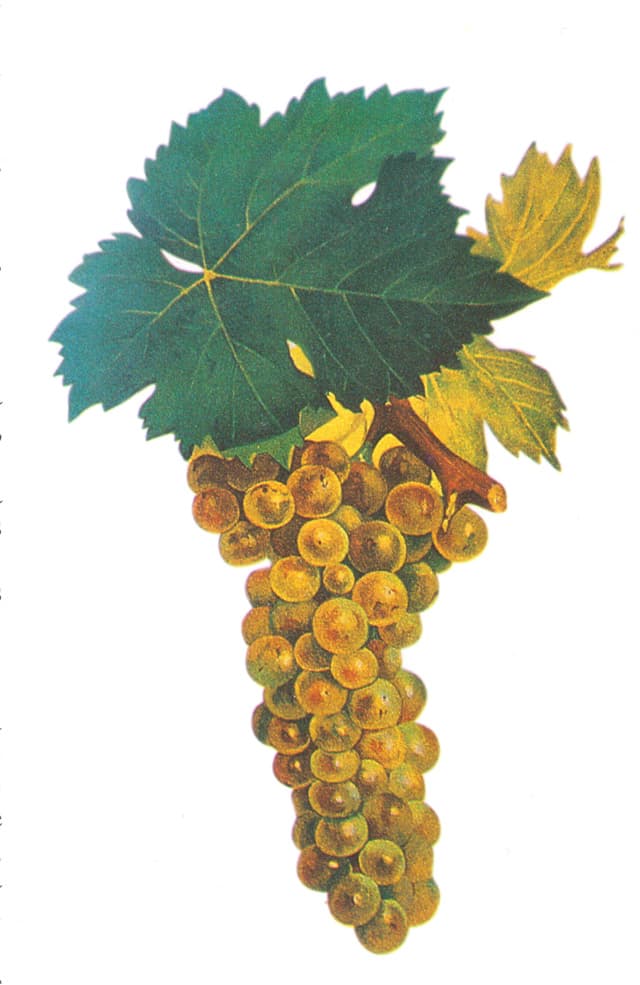
Muscat à Petits Grains is one of the oldest named grapes in the world — grown around the Mediterranean for well over two thousand years, the rare variety whose wine actually tastes of the grape itself. Rutherglen grows a red-skinned mutation, Muscat à Petits Grains Rouges, known locally as Brown Muscat. The colour shift matters: those russet skins bring the extra dimension of dark toffee that the pale versions never quite reach.
The grape reached north-east Victoria in the gold-rush decades of the 1850s, when Rutherglen was briefly one of the richest towns in the colony. Fortified wine was what the market wanted, the hot climate obliged, and by 1900 the region was an empire of “stickies”. Then the world changed its mind. Table wine took over Australia in the 1960s and 70s, fortifieds collapsed, and most regions ripped and replanted. Rutherglen — stubborn, unfashionable, magnificently so — kept topping up the barrels.
Rutherglen Muscat · the youngest tier
Fresh raisin and rose. The entry point — already sweeter than almost anything else in the room.
Classic · a deeper average age
Toffee arrives; the texture thickens toward syrup.
Grand · older still
Dark treacle, cold black tea, candied orange. Poured in half-measures.
Rare · the oldest blends
Near-black with an olive-green rim. Some components predate living memory. Sold by the thimble, remembered for years.
Barrels are refreshed with younger wine and never fully emptied — age compounds
swipe to explore →
How the system works
The method is blending across generations — kin to the Spanish solera, though Rutherglen runs it by palate rather than by rulebook. Grapes are picked late, part-shrivelled, absurdly sweet. Fermentation is stopped early with grape spirit, keeping the sugar; the young fortified then goes into old wood in hot sheds, where it slowly oxidises, concentrates, and darkens. The house style lives in the blending: every bottle is a weave of many barrels and many decades, refreshed but never reset.
Since 1995 the region has classified the results in four ascending tiers — Rutherglen, Classic, Grand and Rare — based on richness, complexity and average age rather than a simple vintage date. By the Rare tier, average ages stretch past twenty years, with drops inside far older. The classification is unique to Rutherglen; no other Australian region needed one, because no other region kept the wine.
Tasting liquid history
Muscat is best met in the place that makes it — a Rutherglen tasting flight climbs the four tiers in order, and the room goes quiet somewhere around Grand. Beyond the Murray, the Swan District outside Perth carries Australia’s other great fortified lineage — its hot valley floor was making liqueur styles when the colony was barely two decades old. And the Riverland keeps the tradition in its own sun-drenched register along the South Australian stretch of the river.
Serve it slightly cool, after dinner, with nothing but time. A bottle lasts months once opened — the wine has already survived a century of air; a few weeks more won’t hurt it.
In the glass
Rutherglen — amber walnut
Classic — burnished mahogany
Grand — dark treacle
Rare — near-black, green rim
Where to taste Muscat
VIC · the heartland
Rutherglen
A town on the Murray River that gave Australia its most distinctive wine style: Rutherglen Muscat and Topaque are the products of a century of solera blending, unbroken family winemaking tradition, and summer heat that turns grapes into something closer to liquid gold.
Wine tours in RutherglenWA
Swan District
The Swan Valley immediately northeast of Perth is where Western Australian wine began: a flat, hot river valley where Chenin Blanc, Verdelho, and fortified wines have been made by the same families since the 1830s, and where a day from the city still delivers genuine cellar door character.
Wine tours in Swan DistrictSA
Riverland
Five hundred kilometres of Murray River frontage and South Australia's highest-volume wine region: the Riverland is where affordable, reliable Australian wine begins, and where a growing number of producers are pushing far beyond that brief.
Wine tours in RiverlandReading about wine is the rehearsal. The tasting room is the show.
Browse every wine tour region