Merlot
For decades Merlot was Cabernet’s silent partner: the softening agent, never the headline. Margaret River is where it started demanding its own bottle.
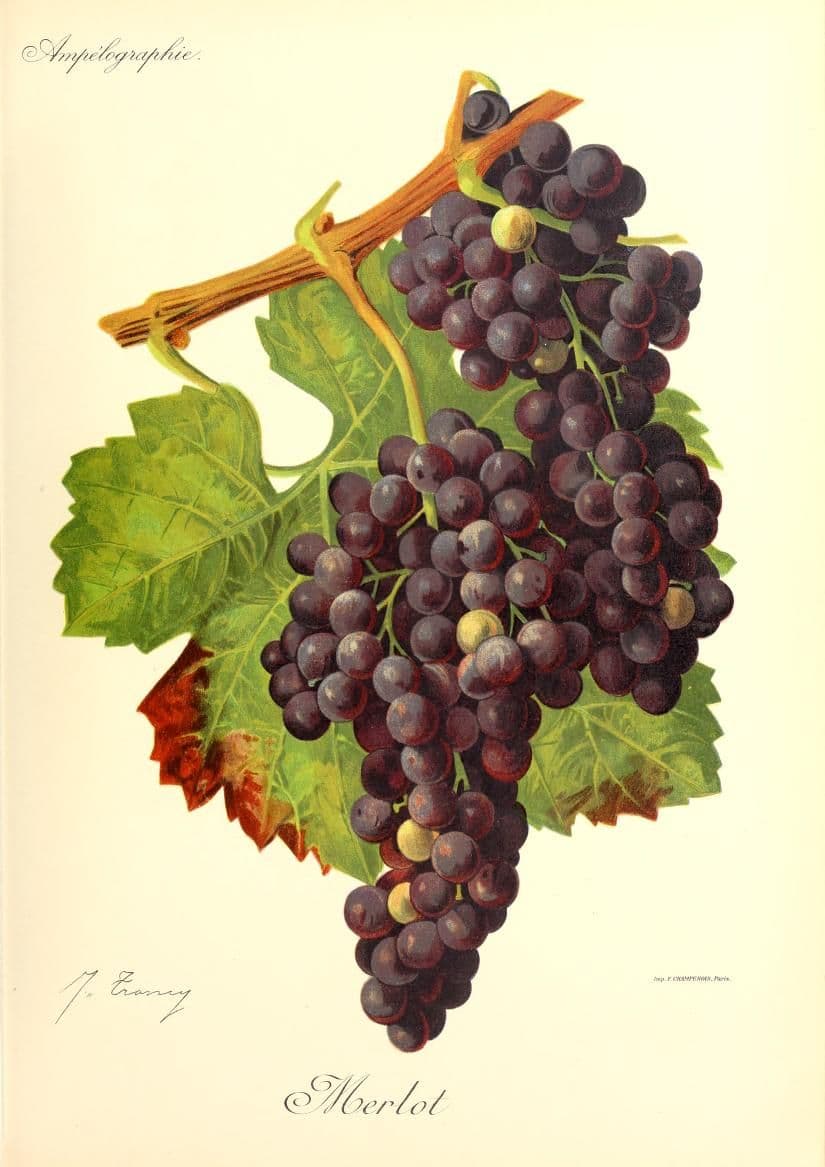
Everyone's second name
Merlot arrived in Australia the way most Bordeaux varieties did, as insurance for Cabernet Sauvignon, not competition. It ripens a week or two earlier, carries softer tannin, and fills out a blend’s midpalate in years when Cabernet alone would taste austere. For most of the twentieth century that was the entire job description: useful, reliable, and never once the name on the front label.
Margaret Riveris where that changed. The region’s maritime climate (warm days moderated by two oceans) turned out to suit Merlot’s early ripening perfectly, and by the 2000s a handful of producers were bottling it alone, no Cabernet required, and it was genuinely good.
Bordeaux's other grape
Merlot is in fact the more widely planted of Bordeaux’s two great reds: it dominates the Right Bank appellations of Pomerol and Saint-Émilion, where the region’s most expensive wines (Petrus chief among them) are built almost entirely around it. The Left Bank’s Cabernet-led fame overshadowed that story internationally for decades, and Australia’s early plantings followed the Left Bank template: Merlot as the supporting act, not the star.
Global fashion did the grape no favours either. A wave of cheap, over-cropped varietal Merlot in the 1990s and 2000s (particularly out of warm, high-yield regions overseas) left the grape with a reputation for softness bordering on blandness, exactly the opposite of what it does when grown with restraint.
Illustrative of the style shift, not a literal label archive
swipe to explore →
What restraint actually produces
A well-made Australian Merlot is not a soft red for people who find Cabernet intimidating. Done properly (lower yields, careful canopy work, real oak rather than a dusting of it), Merlot gives plum and dark cherry fruit, a cocoa-dusted mid-palate, and tannin fine enough to drink young but structured enough to age. Margaret River’s gravelly loams, the same soils that make the region’s Cabernet serious, do the same job for Merlot: they keep vigour in check and concentrate what the vine produces.
Coonawarra’s terra rossa tells a similar story from the other direction: famous for Cabernet, but the same red dirt over limestone gives its Merlot real structure rather than the flabby softness the grape is unfairly known for elsewhere.
Where it earns solo billing
Beyond Margaret River and Coonawarra, Yarra Valley’s cooler sites produce a more perfumed, red-fruited style, and King Valley (better known today for its Italian varieties) has a long and less-celebrated history with serious cool-climate Merlot of its own.
The grape’s comeback isn’t really a comeback at all. It’s a correction: Merlot was never the problem. Low expectations and lower yields were, and the regions that stopped treating it as an afterthought are the ones now pouring it with its own name on the label, first and only.
In the glass
Young: plum, soft violet rim
Margaret River: dark cherry, cocoa
Five years: plum turning to fig
Old bottle: leather, dried herbs
Where to taste Merlot
WA · the heartland
Margaret River
At the southwestern tip of Western Australia, Margaret River is a surf coast turned wine country: where Cabernet Sauvignon and Chardonnay grow to world standard between the Indian Ocean and the Southern Ocean.
Wine tours in Margaret RiverSA
Coonawarra
A narrow strip of terra rossa soil over limestone in South Australia's far southeast: Coonawarra's famous red earth produces Cabernet Sauvignon of a precision and longevity that has earned it a place among the world's great red wine regions.
Wine tours in CoonawarraVIC
Yarra Valley
An hour from Melbourne's CBD and Victoria's oldest wine country: the Yarra Valley's cool Burgundian climate produces Pinot Noir and Chardonnay that have made it one of the most seriously watched regions in the country.
Wine tours in Yarra ValleyVIC
King Valley
A narrow Alpine valley three hours northeast of Melbourne where the Brown family's Dal Zotto and a community of Italian-heritage winemakers have turned Prosecco, Sangiovese, and Nebbiolo into the story that defines modern King Valley.
Wine tours in King ValleyReading about wine is the rehearsal. The tasting room is the show.
Browse every wine tour region